Loop Breakout
New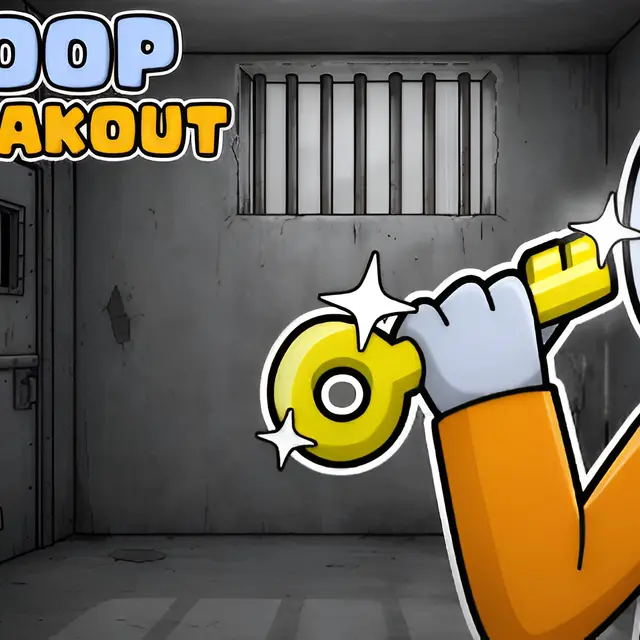
- Genre Puzzle games
- Players 1
- Session 7 min
- Price Free
- Updated
An escape puzzle built around repetition with variation. You are trying to get out of the same space repeatedly, and each loop changes something — a trap that was harmless now is not, a key that was on the table has moved, a route that worked is sealed. The room stays familiar and the solution does not. That structure makes observation the main skill. The first loop teaches you the layout, and every loop after it is about spotting what is different before it matters, which is a more interesting demand than memorising a single correct sequence. The puzzles are fair in the sense that the change is always visible if you look, and unfair-feeling in the sense that you usually do not look until after it has killed you. Execution matters too, though less: there is jumping and some timing around traps, but nothing that requires precision beyond what the puzzle itself needs. Loops are short, the restart is instant, and the progression comes from the number of rule changes stacked on top of each other rather than from longer levels. It is a small, tightly made idea that earns its runtime.
| Arrows or WASD | Move |
|---|---|
| Space | Jump |
| E or click | Interact and pick up |
| R | Restart the loop |
How to play Loop Breakout
- Spend the first loop looking rather than escaping; the layout is the information you need.
- Compare the room to the previous loop before touching anything.
- Treat anything that has moved as the new threat, because it usually is.
- Test traps from a safe distance where the geometry allows it.
- Restart immediately once a loop is compromised; they are short by design.
Tips
- The change is always visible before it is lethal, which makes patience the strongest tactic.
- Keys and switches move between loops more often than walls do.
- If a route worked twice, the third loop is likely to close it.
Questions about Loop Breakout
Do the rules really change?
Yes, something differs each loop.
Is it a precision platformer?
No, the execution demands are modest.
How long is a loop?
A minute or two.
Are restarts fast?
Instant.
Does it work on a phone?
Yes, with on-screen controls.
Does it need installing?
No, it runs in the browser.
Does it get harder?
Yes, by stacking more changes at once.