COBB CAN MOVE
New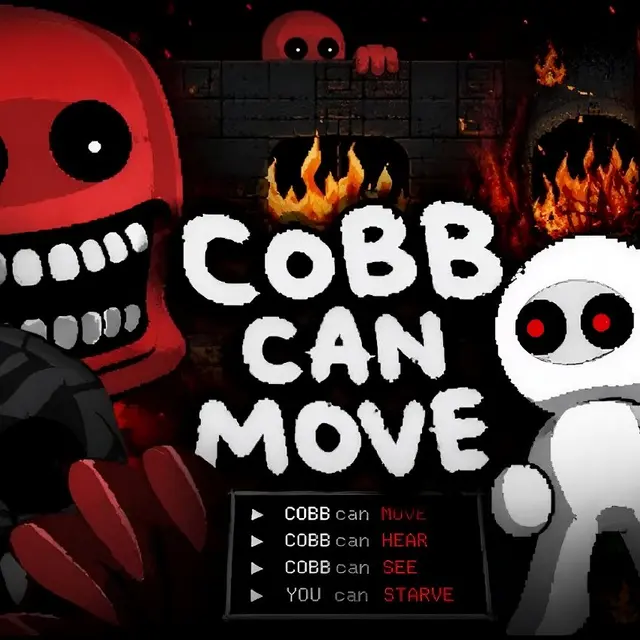
- Genre Puzzle games
- Players 1
- Session 7 min
- Price Free
- Updated
A small indie survival game built around a single realisation, and the title gives it away without spoiling it: something you will assume is a fixed part of the level is not. Everything about how you plan a route changes once that lands, and the early stages are constructed specifically to build the wrong assumption before breaking it. Around that idea is a competent resource-and-positioning game. You manage what you carry, decide which routes are worth the risk, and accept that information costs something to obtain. It is strategic rather than reflexive, so there is time to think, and the horror comes from consequence rather than surprise — a decision made two minutes ago turning out to have been the wrong one. Short, focused and cleverer than its presentation suggests.
| Arrows or WASD | Move |
|---|---|
| Click or E | Interact and use items |
| Tab | Inventory |
| Touch | Tap to move and interact |
How to play COBB CAN MOVE
- Explore cautiously before committing resources; information is the scarce thing here.
- Do not assume any part of the level is permanent.
- Plan a route out before going in, because retreating without one rarely works.
- Carry fewer items and use them sooner; hoarding is how attempts end.
- Treat a failed attempt as a map — knowledge is the progression.
Tips
- The early stages are teaching you an assumption deliberately, so distrust what feels settled.
- Resources spent early usually save more than resources held for an emergency.
- If a route keeps failing, the answer is a different plan rather than better execution.
Questions about COBB CAN MOVE
Is it action or strategy?
Strategy with survival pressure. There is time to think.
Is it scary?
It works on consequence and dread rather than jump scares.
Is there an inventory?
Yes, and managing it is part of the puzzle.
Is it long?
Short and focused.
Does it work on a phone?
Yes, with tap controls.
Does it need installing?
No, it runs in the browser.
Is the twist important?
It reshapes how the whole game is played, which is why the design builds up to it.
Is there much replay value?
Some, because knowing the twist changes how the earlier stages read, and a second run is played entirely differently from the first.