Dreadhead Parkour
New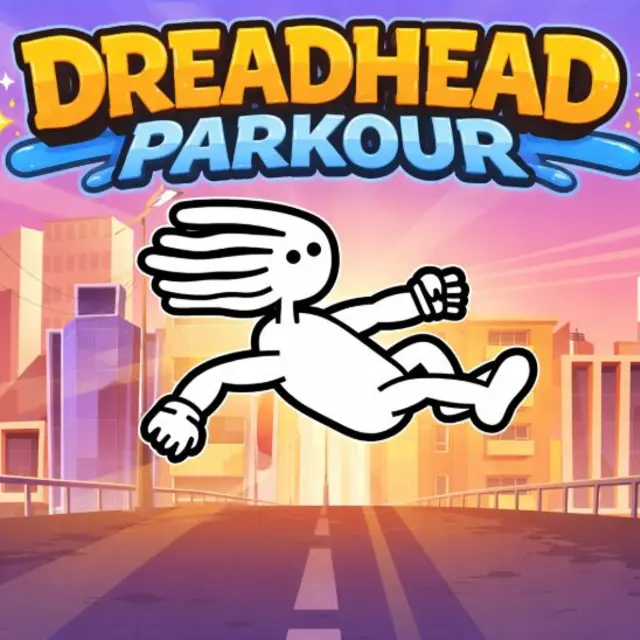
- Genre Arcade games
- Players 1
- Session 5 min
- Price Free
- Updated
A parkour platformer built on flow. Runs, flips, rolls and wall movement chain into each other, and the levels are laid out so the intended route never requires you to stop — which means a course that looks impossible when approached carefully becomes straightforward once you stop approaching it carefully. That is a difficult thing for a platformer to teach and this one does it with layout rather than instruction: the obstacles are spaced so that hesitation puts you short and commitment carries you through. Levels are short, restarts are instant, and the difficulty rises by asking for longer unbroken chains rather than tighter individual jumps. Once you can clear a level the natural next step is clearing it faster, which is where games in this shape find their long tail.
| Arrows or WASD | Run |
|---|---|
| Space | Jump |
| Shift | Roll or slide |
| Against a wall | Jump again to wall run |
| R | Restart the level |
How to play Dreadhead Parkour
- Keep moving. Almost every failure is caused by stopping to think mid-course.
- Roll out of long drops to preserve speed rather than landing flat.
- Wall run early, at contact, rather than after sticking to the surface.
- Read the whole level before the first jump; the route is usually continuous.
- Restart the moment a run loses its flow instead of limping to the end.
Tips
- Commitment is safer than caution here, which is the opposite of most platformers.
- The hardest levels have one difficult transition surrounded by easy movement.
- Chase your own times once a level is cleared; that is where the game opens up.
Questions about Dreadhead Parkour
Is it a precision platformer?
More a momentum one — flow matters more than pixel-perfect jumps.
Are restarts fast?
Instant.
How many levels are there?
Enough to build a progression, escalating in chain length.
Does it work on a phone?
Yes, with on-screen controls.
Does it need installing?
No, it runs in the browser.
Is speedrunning supported?
Informally, and it is where most of the replay value is.
Is it hard?
Moderately, and fair.
Why does stopping fail a level?
The obstacle spacing assumes you arrive with speed. A jump taken from standing lands short of a gap that a running jump clears comfortably.