Swipe Ball
New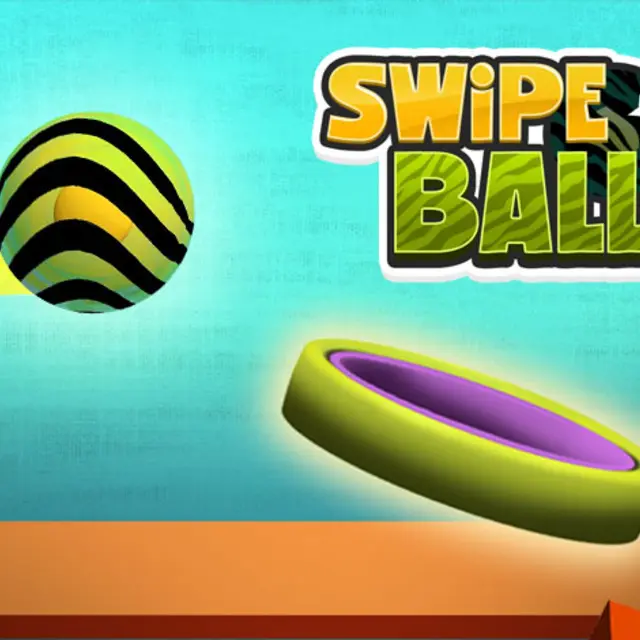
- Genre Puzzle games
- Players 1
- Session 4 min
- Price Free
- Updated
A simple aiming puzzle with one input per attempt. There is a ball, there are wooden blocks in the way, and there is a bucket at the bottom — and a single swipe sets the direction and power of the throw, after which the physics do everything else. The blocks are the design. They are placed so that the direct line to the bucket is refused, which means the intended solution is usually a bounce, and the interesting ones are arrangements where two different banks both look plausible and only one works. Because the physics are consistent, a miss tells you exactly how much to adjust, and most levels fall within three attempts of actually looking at them. There is no timer and no attempt limit, which is the correct structure for a game that wants you to aim rather than to hurry. Levels take under a minute, the presentation is minimal and bright, and the whole thing is suitable for any age. It plays with one swipe on a phone or a mouse drag on a desktop and runs on anything. Small, tidy, and honest about its scope. There are a great many levels behind it, and they escalate by tightening the arrangements rather than by demanding faster input — which keeps it a thinking game all the way through rather than becoming a reflex test in the later stages.
| Swipe or drag | Set direction and power |
|---|---|
| Release | Throw |
| R | Restart the level |
How to play Swipe Ball
- Look for the bank shot; the direct line is usually blocked deliberately.
- Use less power than feels necessary — most misses are overthrown.
- Aim at the block you want to bounce off, not at the bucket.
- Treat a miss as a measurement and adjust by that amount.
- Restart freely; there is no attempt limit.
Tips
- The direct line is blocked on purpose, so the bounce is the intended answer.
- Overthrowing is far more common than underthrowing.
- Consistent physics mean every miss is a precise instruction.
Questions about Swipe Ball
How many inputs per attempt?
One swipe.
Is there a timer?
No.
Are attempts limited?
No.
Is it suitable for children?
Yes.
Does it work on a phone?
Yes.
Does it need installing?
No.
How long is a level?
Under a minute.